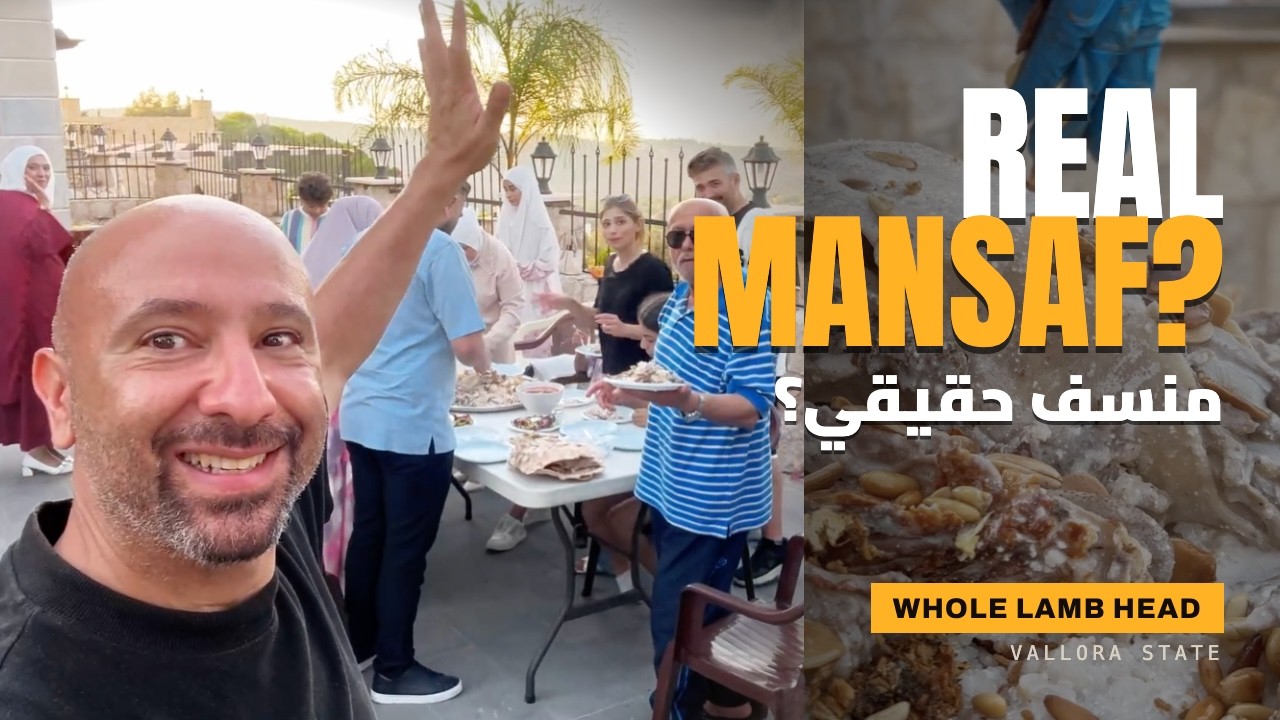
One family table carries two understandings of mansaf. One comes from the Lebanese mountain; the other points toward the Jordanian dish made with jameed. Vallora State spent a full day cooking outside to ask a direct question: can mansaf still be mansaf when the jameed does not behave as planned?
Watch the complete 33-minute Mansaf film on YouTube.
The work before the platter
The film begins in the garden and with the animals before the whole lamb heads are washed and prepared. The cooking moves through sauce, fire and a pot large enough for the heads. Tannour bread is made from scratch; one batch burns and remains in the story. Nothing is edited into effortless perfection.
By 16:40 the first head is cooked. At 23:00 the central problem arrives: what makes a mansaf real, and what happens when the jameed forces a decision? The laban is cooked, the platter is built, rice is crowned with the head, and the family gives the verdict at the table.
A food film built around disagreement
This is not a shortened recipe card. It is a record of a day's labour and a family argument in which ingredients carry memory. The Lebanese mountain version and the Jordanian version are not treated as interchangeable; the film lets the difference remain visible all the way to the final taste.
Every dish shown was eaten by the family that evening. The camera stays for the preparation, the burnt bread, the jameed problem and the decision instead of showing only the finished platter.
Continue through the Vallora archive
After the verdict, follow the fire, harvest, animals and mountain-life routes, or open the Vallora State channel if you want the next film.